

Key Takeaways
- Buildings insurance covers the physical structure of a home; contents insurance covers movable possessions inside it.
- Homeowners typically need both; renters generally only need contents insurance.
- Certain items - such as carpets or fitted kitchen appliances - can fall into a grey zone between the two policies.
- Neither policy is automatically comprehensive; exclusions vary, so reading policy documents carefully is essential.
- Both policies can be purchased separately or bundled, but bundling doesn't always mean better coverage.
Option A
Buildings Insurance
The policy that protects the structure itself.
Best for: Homeowners who need to cover the physical structure, permanent fixtures, and fabric of their property against damage or loss.
Option B
Contents Insurance
The policy that protects what's inside.
Best for: Anyone - owner or renter - who wants financial protection for their personal belongings, furniture, and household items.
If you own the home you live in
Buildings Insurance (plus Contents Insurance)
As a homeowner you are responsible for the structure. Most mortgage lenders require buildings insurance, and contents coverage protects your possessions separately.
If you rent your home
Contents Insurance
Your landlord is typically responsible for insuring the building. You only need to protect your own belongings inside the property.
If you own a property you rent out to others
Buildings Insurance
As the property owner, the structural risk is yours. Specialist landlord buildings insurance may also be appropriate for your situation.
If you want broad protection and own your home
Buildings Insurance and Contents Insurance
Combining both policies - whether bundled or separate - ensures neither the structure nor your possessions face uninsured gaps.
The Core Distinction: Structure vs. Belongings
Home insurance in the US is not a single, unified product. It can be helpful to think of two distinct layers: one covering the physical shell of the home, and one covering everything you'd take with you if you moved out.
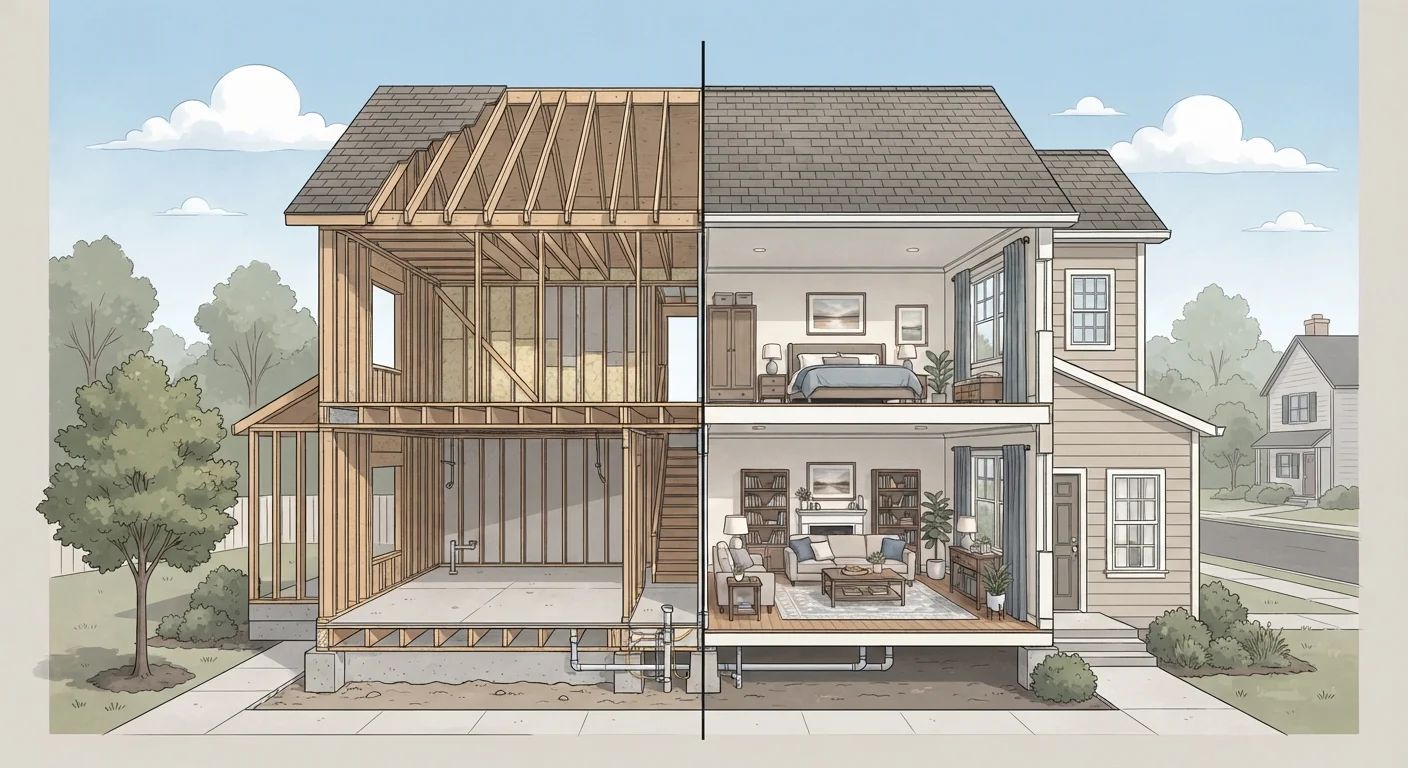
Buildings insurance covers the permanent, fixed elements of a property. That includes the walls, roof, floors, ceilings, windows, doors, and built-in fixtures such as fitted kitchens and bathroom suites. If a storm damages your roof or a burst pipe causes structural damage, a buildings policy is what responds.
Contents insurance covers movable possessions - furniture, electronics, clothing, appliances, and personal items. A simple mental test: if you turned your home upside down, everything that would fall out is broadly your "contents." If a fire destroyed your furniture or a burglary took your laptop, a contents policy is the relevant cover.
For a broader overview of how insurance policies work mechanically, see our guide to what you're actually paying for.
| Criterion | Buildings Insurance | Contents Insurance |
|---|---|---|
| What it covers | Structure, fixtures, and fabric of the property | Movable possessions and personal belongings |
| Who typically needs it | Homeowners and landlords | Homeowners and renters |
| How value is calculated | Rebuild cost of the property | Replacement value of belongings |
| Required by mortgage lenders | Usually yes | No |
| Covers accidental damage (standard) | Often an optional add-on | Often an optional add-on |
| Covers garden structures | Sometimes, check policy terms | Rarely, check policy terms |
Who Needs Each Type - and the Grey Zone
Your tenure in a property largely determines which policies you need. Homeowners are responsible for the building itself and typically require both types of cover. Most mortgage lenders in the US actually require buildings insurance as a condition of the loan - it protects their financial interest in the property as much as yours.
Renters, on the other hand, have no ownership stake in the structure. The landlord holds that responsibility. Renters typically only need contents insurance to protect their personal belongings.
Landlords who own property rented to others need buildings coverage for the structure, and may also want additional landlord-specific provisions not found in standard homeowner policies.
Fitted Items: A Common Coverage Ambiguity
Items like fitted carpets, integrated appliances, and garden outbuildings often sit in an unclear boundary between buildings and contents policies. Insurers can define these differently, meaning the same item might be covered under one policy type and excluded under another. Before assuming coverage, check how your specific insurer classifies these items in your policy documents.
The grey zone between the two policies catches many people off guard. Fitted carpets, for example, may be treated as part of the building's fabric by some insurers and as contents by others. Built-in appliances, garden structures, and outbuildings can also fall differently depending on how each insurer defines their terms. Always check individual policy definitions rather than assuming.
To understand common exclusions that can leave you exposed, our article on what insurance actually covers - and what it doesn't walks through the gaps most policyholders miss.
Key Differences at a Glance
While the general principles are straightforward, the practical details between buildings and contents policies differ in ways that matter when you're evaluating coverage.
~60%
Renters without contents insurance
Industry surveys suggest a significant proportion of US renters carry no contents insurance, leaving personal belongings unprotected against theft or damage.
Rebuild ≠ Market Value
Buildings insurance valuation principle
The rebuild cost of a home - what it costs to reconstruct from scratch - is often significantly lower than its market sale price, and is the correct basis for buildings insurance.
Both policy types typically require you to declare an accurate value - rebuild cost for buildings, replacement value for contents. Underinsurance is a genuine risk: if you insure your contents for less than they're worth and make a claim, the insurer may apply a proportional reduction to your payout. This principle, sometimes called the "average clause," can significantly reduce what you receive.
It's also worth noting that neither buildings nor contents insurance is automatically comprehensive. Standard policies carry exclusions - accidental damage, for instance, is often an optional add-on rather than a standard inclusion. Understanding the main insurance categories can help you see how these two home policies fit into the broader landscape of cover available to adults.
Making the Right Decision for Your Situation
The right combination of cover depends on your specific circumstances: whether you own or rent, the value of your belongings, your property's rebuild cost, and your own risk tolerance. There is no universal correct answer, and no policy structure guarantees full protection - all policies carry exclusions and conditions.
A few practical steps can help you make an informed choice. First, get an accurate rebuild cost estimate for your property - this is not the same as its market value and is often lower. Second, conduct a proper contents inventory, including items in garages and outbuildings. Third, read the exclusions section of any policy before purchasing, not after.
Some insurers offer combined buildings and contents policies, which can simplify administration. However, bundling does not automatically mean better coverage or lower cost - it's worth comparing the terms of combined and separate policies on their own merits.
For anyone considering whether to self-fund risk rather than insure it, our balanced look at the trade-offs of self-insuring outlines when that approach makes sense and where it can leave significant gaps.
This article provides general information about insurance types and is not personalised insurance or financial advice. Coverage terms, exclusions, and regulations vary by provider and state. Always read your policy documents in full and consult a licensed insurance professional before making coverage decisions.