

Key Takeaways
- Self-insurance means intentionally saving money to cover future losses instead of buying a policy.
- It can work well for low-value, predictable risks - but catastrophic losses can wipe out even disciplined savers.
- Some insurance types, like auto liability and health coverage, are legally required in most U.S. states.
- The decision depends on your asset base, risk tolerance, and what you can genuinely afford to lose.
- Self-insurance and traditional policies aren't always mutually exclusive - many people blend both approaches.
Eliminates ongoing premium payments
Premiums are a guaranteed cost - you pay them whether or not you ever file a claim. For low-risk individuals, years of premiums can exceed what they'd ever recover in claims.
Keeps savings in your control
Money set aside for self-insurance remains yours and continues to earn interest or investment returns, unlike premiums paid to an insurer.
Avoids claim-related premium increases
Filing an insurance claim can raise your premiums at renewal. Self-insuring for smaller losses sidesteps that cycle entirely.
Works well for predictable, low-severity risks
If the likely loss is small and recoverable - a cracked phone screen, a minor appliance repair - self-insurance avoids paying for overhead, insurer profit margins, and administrative costs bundled into every premium.
Removes insurer involvement from small claims
Some people prefer the simplicity of paying out of pocket rather than navigating the claims process, documentation requirements, and potential disputes for minor losses.
No protection against catastrophic losses
A single large event - a serious illness, a house fire, a major liability lawsuit - can far exceed any realistic savings reserve and produce lasting financial damage.
Requires consistent, disciplined saving
Self-insurance only functions if the reserve is actually funded and left untouched. In practice, savings earmarked for emergencies often get redirected to other needs.
Certain coverage is legally mandatory
Auto liability insurance is required by law in most U.S. states. Going without it exposes you to fines, license suspension, and personal liability for damages.
Risk concentrates entirely on you
Insurance works through risk pooling - many people share the cost of losses that only some will experience. Self-insuring exits that pool, meaning you absorb 100% of your own losses with no spreading of risk.
May not be viable for most income levels
Building and maintaining a reserve large enough to cover serious losses requires significant liquid assets - a threshold most households haven't reached.
Loss timing is unpredictable
A disaster can strike before your reserve is adequately funded. Unlike a policy that is effective from day one, a savings-based reserve takes time to build to a meaningful level.
Our Verdict
Self-insurance is a legitimate financial strategy for people with substantial liquid assets and a clear-eyed view of their risk exposure. It fails, sometimes catastrophically, when used to cover risks that are low-probability but high-cost - the exact scenario insurance is built to handle. Most households benefit from a hybrid approach: carry formal coverage for large, unpredictable exposures and self-insure only for smaller, manageable ones.
Best suited to financially established individuals with significant liquid reserves who face genuinely low-severity risks and fully understand the potential downside of going without coverage.
What Self-Insurance Actually Means
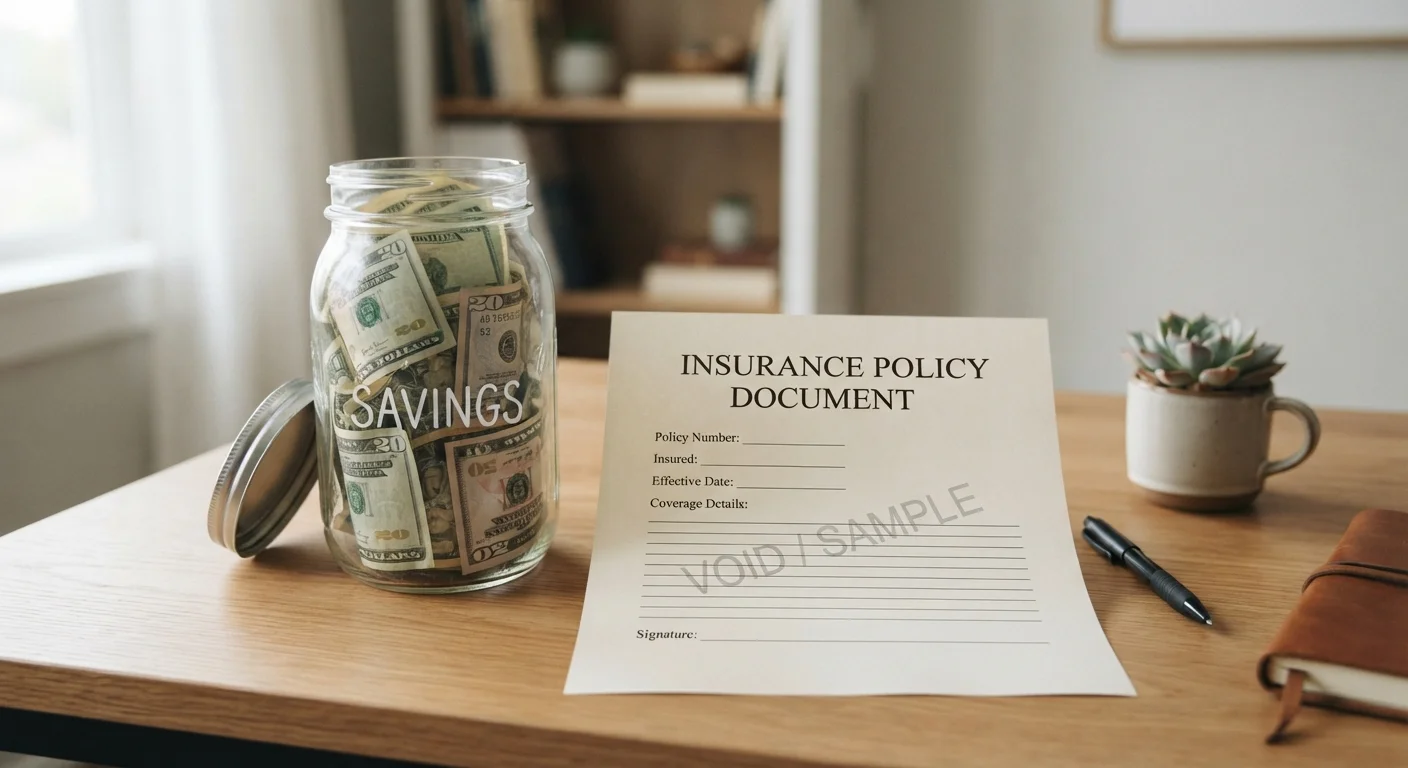
Self-insurance isn't a product you buy - it's a deliberate decision to absorb financial risk yourself rather than transfer it to an insurer. In practice, this usually means setting aside a dedicated reserve of savings large enough to cover anticipated losses.
This approach is already common at the margins of conventional insurance: when you raise your deductible, you're self-insuring for the gap between zero and that deductible amount. The concept simply extends that logic further. To understand why insurers exist in the first place - and what you give up when you step outside that system - it helps to review how insurance actually works.
Self-insurance is used by large corporations and wealthy individuals who can genuinely sustain large losses. Whether it makes sense for an individual household depends on assets, income stability, and the specific risk being weighed.
The Case For Self-Insuring
There are legitimate financial reasons some people choose to forego certain policies. Understanding those reasons helps clarify when the strategy holds up - and when it doesn't.
Eliminates ongoing premium payments
Premiums are a guaranteed cost - you pay them whether or not you ever file a claim. For low-risk individuals, years of premiums can exceed what they'd ever recover in claims.
Keeps savings in your control
Money set aside for self-insurance remains yours and continues to earn interest or investment returns, unlike premiums paid to an insurer.
Avoids claim-related premium increases
Filing an insurance claim can raise your premiums at renewal. Self-insuring for smaller losses sidesteps that cycle entirely.
Works well for predictable, low-severity risks
If the likely loss is small and recoverable - a cracked phone screen, a minor appliance repair - self-insurance avoids paying for overhead, insurer profit margins, and administrative costs bundled into every premium.
Removes insurer involvement from small claims
Some people prefer the simplicity of paying out of pocket rather than navigating the claims process, documentation requirements, and potential disputes for minor losses.
~$1,000
Typical annual cost of homeowners insurance
The National Association of Insurance Commissioners has consistently reported average homeowners premiums in roughly this range nationally, though costs vary significantly by location and coverage level.
$10,000+
Minimum reserve often cited for a basic emergency fund
Financial planning guidance commonly recommends three to six months of living expenses in liquid savings - self-insuring meaningful risks requires reserves that often exceed standard emergency fund targets.
Where Self-Insurance Falls Short
The same logic that makes self-insurance appealing in stable, low-risk situations breaks down quickly when you face a large, unexpected loss. These are the gaps worth taking seriously.
No protection against catastrophic losses
A single large event - a serious illness, a house fire, a major liability lawsuit - can far exceed any realistic savings reserve and produce lasting financial damage.
Requires consistent, disciplined saving
Self-insurance only functions if the reserve is actually funded and left untouched. In practice, savings earmarked for emergencies often get redirected to other needs.
Certain coverage is legally mandatory
Auto liability insurance is required by law in most U.S. states. Going without it exposes you to fines, license suspension, and personal liability for damages.
Risk concentrates entirely on you
Insurance works through risk pooling - many people share the cost of losses that only some will experience. Self-insuring exits that pool, meaning you absorb 100% of your own losses with no spreading of risk.
May not be viable for most income levels
Building and maintaining a reserve large enough to cover serious losses requires significant liquid assets - a threshold most households haven't reached.
Loss timing is unpredictable
A disaster can strike before your reserve is adequately funded. Unlike a policy that is effective from day one, a savings-based reserve takes time to build to a meaningful level.
Self-Insurance Is Not the Same as Going Bare
Choosing to self-insure implies an intentional, funded plan - a dedicated reserve sized to the risk you're accepting. Simply not buying a policy without setting money aside isn't self-insurance; it's going unprotected. The distinction matters because the financial exposure is identical, but the preparation is not. If you're considering dropping a policy, establish what your realistic replacement reserve looks like before canceling coverage.
The Risks You Cannot Self-Insure
Some risks are structurally unsuited to self-insurance, regardless of how much you've saved. Catastrophic health events, for instance, can generate six- or seven-figure medical bills in a short period - a figure that would exhaust most households' savings entirely. Similarly, a liability judgment in an auto accident can exceed a million dollars, an exposure that virtually no individual savings account can absorb.
It's also worth noting that certain coverage is not optional. Auto liability insurance is legally required in nearly every U.S. state, and the Affordable Care Act created a framework where going without health coverage carries its own financial risks. Underinsurance is already a widespread problem - self-insuring can be seen as taking that risk to its logical extreme.
Before deciding to skip a policy, map out the worst realistic outcome. If that number would meaningfully threaten your financial stability, self-insurance is likely the wrong tool for that particular risk.
A Practical Middle Ground
Self-insurance and traditional policies don't have to be competing choices. Many financially informed households use a blended approach: they carry high-deductible plans for major exposures - health, liability, property - and self-insure for smaller, predictable costs.
For example, skipping an extended warranty on a moderately priced appliance is a form of self-insurance most people practice without naming it as such. Choosing not to insure a ten-year-old car for comprehensive and collision - while still carrying the legally required liability coverage - is another common application.
If you're still working out which risks genuinely require formal coverage, this grounded guide to your first insurance policy walks through the main categories and what to look for. And because policies vary significantly in what they actually pay out, understanding exclusions and coverage gaps is a useful companion step before making any decision to go without.
This article is for general informational purposes only and does not constitute personalized financial, insurance, or legal advice. Coverage requirements, risks, and financial circumstances vary widely. Consult a licensed insurance professional or qualified financial adviser before making decisions about your own coverage.