

| Highest-weighted factor | Payment history (~35%) (FICO® Score model) |
| Second-highest factor | Credit utilisation (~30%) (FICO® Score model) |
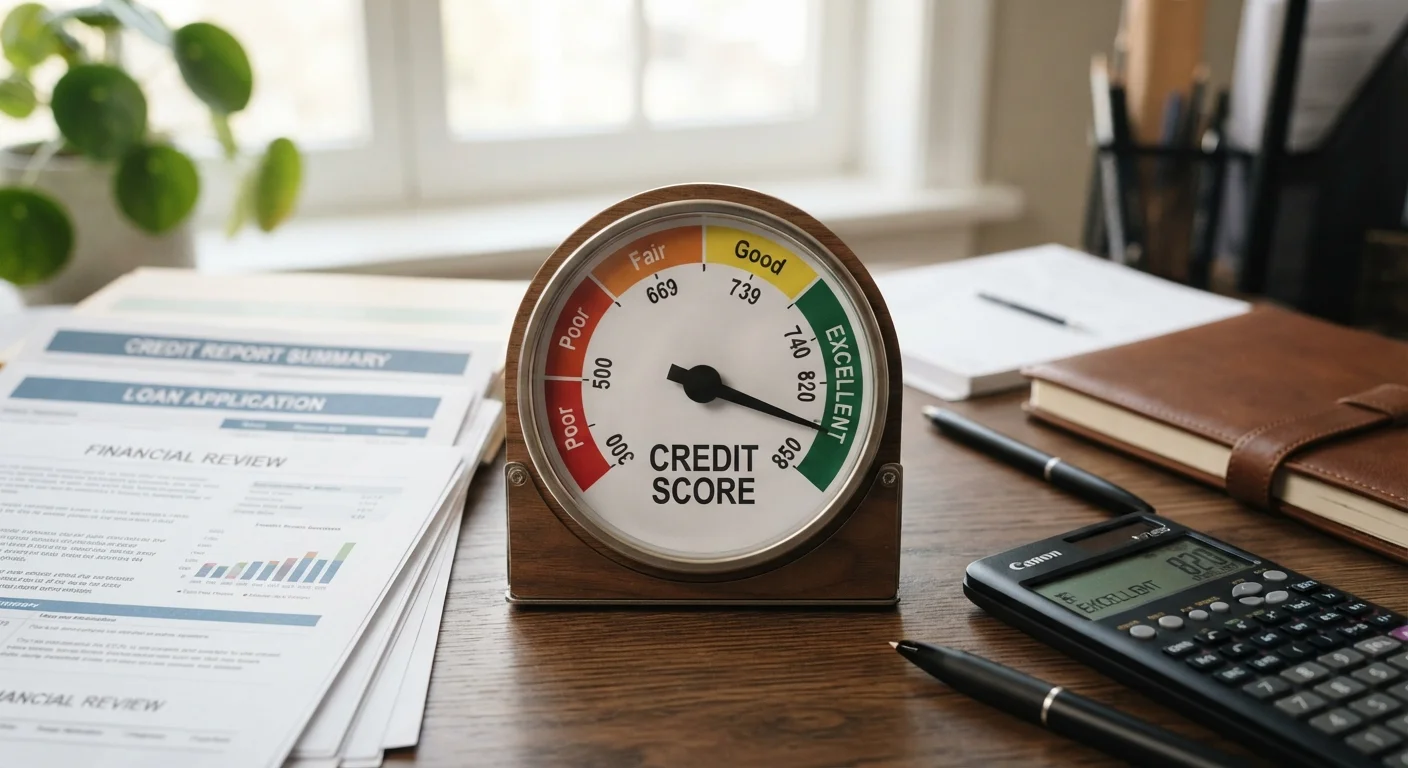
| Score range (FICO®) | 300-850 |
| Credit mix and new credit combined | ~20% of score (FICO® Score model) |
| Hard inquiry impact duration | Typically up to 12 months (General industry guidance) |
Why the Five Factors Matter
Most credit scores used by US lenders - including the widely referenced FICO® Score - are calculated using five categories of information drawn from your credit report. Understanding what those categories are and how much each one contributes can help you make smarter decisions about borrowing, repayment, and account management.
This article breaks down each factor clearly. For broader context on what a credit score actually represents, see our plain-language explainer on credit scores.
| Highest-weighted factor | Payment history (~35%) (FICO® Score model) |
| Second-highest factor | Credit utilisation (~30%) (FICO® Score model) |
| Score range (FICO®) | 300-850 |
| Credit mix and new credit combined | ~20% of score (FICO® Score model) |
| Hard inquiry impact duration | Typically up to 12 months (General industry guidance) |
The Five Factors, Explained
1. Payment History (~35%)
The single largest factor is whether you pay your bills on time. Late payments, collections, charge-offs, and bankruptcies all appear on your credit report and weigh heavily against your score. Consistent on-time payments, over months and years, are the most reliable way to build a strong score. Even one missed payment can have a measurable negative effect - and the more recent or severe the missed payment, the greater the impact.
2. Credit Utilisation (~30%)
Credit utilisation is the percentage of your available revolving credit (primarily credit cards) that you are currently using. If your total credit limit is $10,000 and you carry a $3,000 balance, your utilisation is 30%. Lower utilisation is generally associated with higher scores. Many credit professionals cite keeping utilisation below 30% as a useful guideline, though this is a general observation rather than a guaranteed outcome.
3. Length of Credit History (~15%)
Scoring models consider how long your accounts have been open - specifically the age of your oldest account, your newest account, and the average age across all accounts. Longer history gives lenders more data to assess your behaviour. This is why closing old, unused credit cards can sometimes reduce your score, even if those cards carry no balance.
4. Credit Mix (~10%)
Having experience with different types of credit - revolving accounts like credit cards and instalment accounts like auto loans or mortgages - can modestly benefit your score. This factor reflects the idea that managing varied types of debt responsibly demonstrates broader financial reliability. That said, it carries the least combined weight of the five factors, and opening new accounts purely to diversify is rarely worth the other trade-offs.
5. New Credit (~10%)
Each time you apply for credit, lenders typically perform a hard inquiry on your report, which can temporarily lower your score by a few points. Multiple applications in a short period can signal financial stress to scoring models. However, when you are shopping for a single loan - such as a mortgage or auto loan - multiple inquiries made within a short window (often 14-45 days, depending on the model) are usually treated as a single inquiry.
Credit Utilisation
The ratio of your current revolving credit balances to your total revolving credit limits, expressed as a percentage. It is one of the most heavily weighted factors in most credit scoring models.
Hard Inquiry
A formal review of your credit report initiated when you apply for credit. Hard inquiries are visible to other lenders and can temporarily lower your credit score by a small amount.
Revolving Credit
A type of credit account with a reusable credit limit - such as a credit card or home equity line of credit - where the available credit replenishes as you repay what you owe.
Instalment Account
A loan with a fixed repayment schedule of equal payments over a set term, such as a mortgage, auto loan, or personal loan. These differ from revolving accounts in structure.
Charge-Off
When a lender writes off an unpaid debt as a loss after a period of non-payment, typically around 180 days. A charge-off appears on your credit report and significantly harms your score.
What These Factors Mean for Your Decisions
The weightings above reflect the FICO® Score model's approximate breakdown and are widely cited, but different scoring models - such as VantageScore - may weight factors somewhat differently. No single action guarantees a score increase, and results vary based on your overall credit profile.
What the framework does offer is clarity: payment history and utilisation together account for roughly two-thirds of your score under common models. Focusing on those two areas first is often the most practical approach.
To understand what specific information is driving your current score, your credit report is the source to consult. Our guide on reading your credit report walks through each section in straightforward terms. And if you have encountered advice that seems to contradict what you have read here, our credit score myths article addresses the most frequently repeated misconceptions.
This article is for general informational purposes only and does not constitute personalised financial or credit advice. Consult a licensed financial adviser or credit counsellor for guidance specific to your situation.