

Key Takeaways
- File a Property Irregularity Report (PIR) at the airport before leaving — this is required for any claim.
- Airlines have defined liability windows: typically 21 days before a bag is officially declared lost.
- Keep all receipts for essential interim purchases — they are evidence for reimbursement.
- Travel insurance and credit card protections may cover gaps that airline liability does not.
- Checking in early and tagging bags clearly reduces the risk of misrouting from the start.
What you will need
Why Bags Go Missing — and What the System Actually Does
Baggage mishandling is far more common on connecting itineraries than on direct flights. A tight connection, a last-minute gate change, or a manual tag scan that fails can send your bag to a completely different city. The good news: the majority of delayed bags are located and returned within a few days. Truly lost bags — as in, permanently unrecovered — represent a small fraction of all mishandling cases.
What most travelers don't realize is that airlines operate active tracing systems. Once you file a PIR, your bag tag barcode is flagged across the network. Ground handlers at other airports are prompted to scan and route any bag matching your file. The system works — but only if you start the process correctly at the airport. If you're weighing future trips and wondering whether avoiding check-in entirely might be worth it, our carry-on vs. checked bag guide lays out the real trade-offs clearly.
Baggage Claim Receipt / Bag Tag
The tag number on your receipt is how the airline tracks your bag in its system — you cannot file a PIR without it.
Airline's Baggage Tracing Portal
Most major airlines offer an online portal where you can enter your PIR reference number to monitor bag location in real time.
Travel Insurance Policy Documents
Needed to understand your coverage for baggage delay, loss, and emergency purchases before filing a supplemental claim.
Credit Card Benefits Summary
Some credit cards include baggage delay or loss protection when the ticket was purchased with that card — worth checking before your trip.
Step-by-Step: What to Do From the Carousel Onward
What you will need
Confirm the bag is genuinely missing
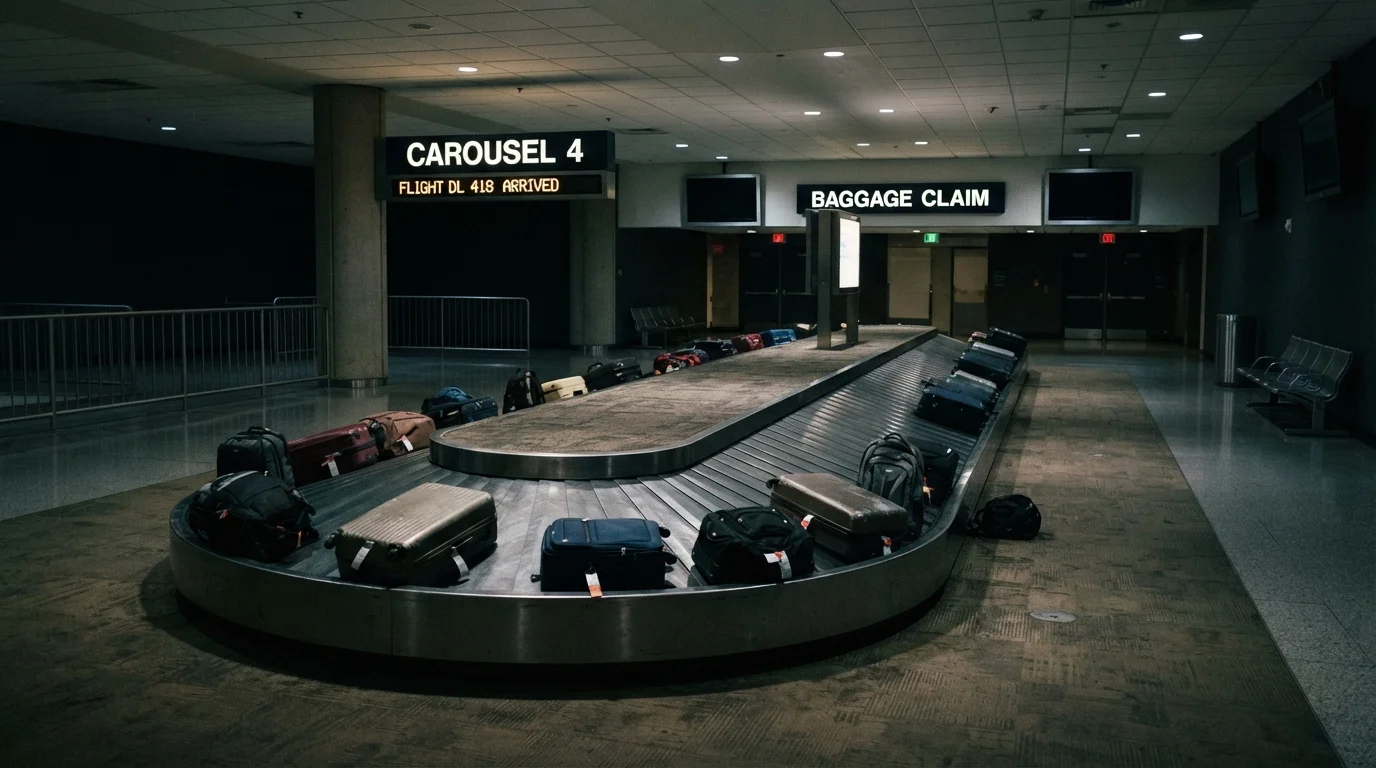
Wait until the carousel has fully stopped and been cleared. Occasionally bags are offloaded to a separate oversize or delayed-arrival area nearby. Check any secondary carousels listed on the arrivals board and ask airport staff whether a delayed flight's bags are still being processed before assuming the worst.
Go directly to the airline's baggage desk — before leaving the airport
Locate the airline's baggage services counter, usually positioned near the claim hall exits. Filing a Property Irregularity Report (PIR) in person, before you exit the airport, is critical. Most airlines require this as a condition of any claim; doing it later by phone or email significantly weakens your position. Bring your boarding pass, passport, and bag tag receipt.
Get your PIR reference number in writing
The agent will search the airline's tracking system and open a file. You should receive a PIR reference number — sometimes called a file reference or claim number. Write it down and photograph the form. This number is your access point for all future communication, online tracking, and any escalated claim.
Document your losses and make necessary interim purchases
If your bag contains essential items — medication, formal clothing for an imminent event, basic toiletries — most airlines will reimburse reasonable emergency purchases during a delay. Keep every receipt. Photograph what you buy. Be aware that airlines set limits on what counts as reasonable; lavish purchases are unlikely to be covered.
Make a detailed written inventory of everything in the missing bag, including estimated values and approximate purchase dates. This becomes your evidence for both the airline claim and any travel insurance claim.
Track your bag and follow up systematically
Use the airline's baggage tracing portal with your PIR reference number. Under the Montreal Convention — the international treaty governing most international air travel — bags delayed beyond 21 days are classified as officially lost, at which point the formal compensation process begins. Domestic rules in the US are governed separately by the Department of Transportation.
Contact the airline every 48–72 hours if there is no update. Keep a written log of every call or message, noting date, time, and the name of the agent you spoke with.
File supplemental claims with your insurer or card provider
Once you have your PIR number and any interim expense receipts, contact your travel insurer and credit card provider if applicable. Travel insurance policies typically cover baggage delay separately from total loss — both have different claim windows and documentation requirements. Submit claims promptly; most policies have short filing deadlines. See our step-by-step insurance claim guide for a walkthrough of what to expect at each stage.
Liability Limits Are Lower Than You Might Expect
Under the Montreal Convention, airline liability for lost or damaged checked baggage is capped — currently around 1,288 Special Drawing Rights (approximately $1,700 USD, subject to exchange rate fluctuation). If your bag contained items of higher value, this cap applies unless you declared excess value and paid the applicable fee at check-in. Travel insurance or credit card protections may cover the gap, but neither is guaranteed.
Protecting Yourself Before Your Next Trip
Prevention isn't foolproof, but a few habits meaningfully reduce risk. Always attach a sturdy external luggage tag with your name and a contact email. Place a secondary identification card inside the bag as well — this helps airlines reunite bags when the external tag is torn off. Avoid checking bags on itineraries with tight connections under 90 minutes if you can help it.
Taking a photo of your bag and its contents before checking in gives you visual evidence for both airline and insurance claims. For travel involving complex logistics or multiple carriers, building a broader contingency plan pays off — our guide on contingency planning for travelers covers what to prepare before disruptions happen.
Pack a Day-One Essentials Kit in Your Carry-On
A small carry-on pouch with one day's worth of medication, a charger, a change of undergarments, and any irreplaceable items eliminates your most urgent vulnerabilities if a checked bag is delayed. This single habit is the most effective buffer against a mishandling event disrupting the start of your trip.