

Key Takeaways
- Machu Picchu sits at roughly 7,970 feet — lower than Cusco, but altitude sickness is still a real risk.
- Entry requires advance permits purchased through Peru's official ticketing system, with strict daily visitor caps.
- The train to Aguas Calientes is the primary access route; there is no road directly to the citadel.
- Crowds peak mid-morning; arriving at opening or late afternoon changes the experience significantly.
- Weather is highly variable — rain gear is essential regardless of the season you visit.
Understanding the Altitude
Machu Picchu sits at approximately 7,970 feet (2,430 meters) above sea level. That number often surprises first-time visitors who have heard it's lower than Cusco — which it is, at roughly 11,150 feet — and assume altitude won't be a factor. It still can be.
Most travelers fly into Cusco and spend time there before descending to Aguas Calientes (the gateway town to Machu Picchu), which sits at only about 6,700 feet. This descent often brings relief. However, if you're coming from sea level and rushing through the itinerary, even 7,970 feet can cause headaches, fatigue, or mild nausea — particularly if you're moving quickly through the ruins.
Altitude Sickness Is a Real Consideration
Altitude sickness (acute mountain sickness) can affect anyone, regardless of age or fitness level. Symptoms include headache, nausea, dizziness, and fatigue. If you experience severe symptoms — confusion, difficulty walking, or significant shortness of breath — descend and seek medical attention immediately. Consult a qualified healthcare provider before your trip about acclimatization strategies appropriate for your individual health situation.
Altitude affects individuals differently regardless of fitness level or age. Common acclimatization strategies include spending two to three nights in Cusco before visiting, staying well-hydrated, avoiding alcohol on arrival days, and eating lighter meals. Consult a physician before your trip about whether altitude medication is appropriate for your situation — this is a personal medical decision, not a general recommendation.
How to Actually Get There
There is no road that brings private vehicles directly to Machu Picchu. The standard route involves flying to Cusco, then taking a train from Cusco (or the nearby town of Ollantaytambo) to Aguas Calientes. From Aguas Calientes, you either take a shuttle bus up the switchback road to the citadel entrance or hike the steep footpath — roughly 1.5 to 2 hours of climbing.
An alternative is hiking the Inca Trail, a multi-day trek through the Andes that ends at the Sun Gate above the ruins. This route requires its own separate permit, booked well in advance — sometimes more than six months ahead. Other trek options such as the Salkantay or Lares routes connect to the train system at various points before Aguas Calientes.
Book your Machu Picchu entry ticket before booking your flights — not after. The ticket availability, not airfare, is the binding constraint on your itinerary.
Tickets for preferred time slots and the Huayna Picchu hike sell out weeks or months in advance, and an itinerary built around unavailable slots creates avoidable frustration.
If your schedule allows, visit on two consecutive half-days rather than one full day. The light, crowd levels, and atmospheric conditions differ dramatically between early morning and late afternoon.
Two-visit tickets are available through the official system, and using both allocations gives you a more complete and less congested experience of the site.
Ollantaytambo is a practical base for many travelers. The train journey from there to Aguas Calientes is significantly shorter than from Cusco, and Ollantaytambo itself is an impressive Inca site worth exploring.
The Permit and Entry System
Peru introduced a mandatory reservation system with timed entry slots and daily visitor caps. Tickets must be purchased in advance through the official government ticketing portal. Walking up and buying a ticket at the gate is no longer possible.
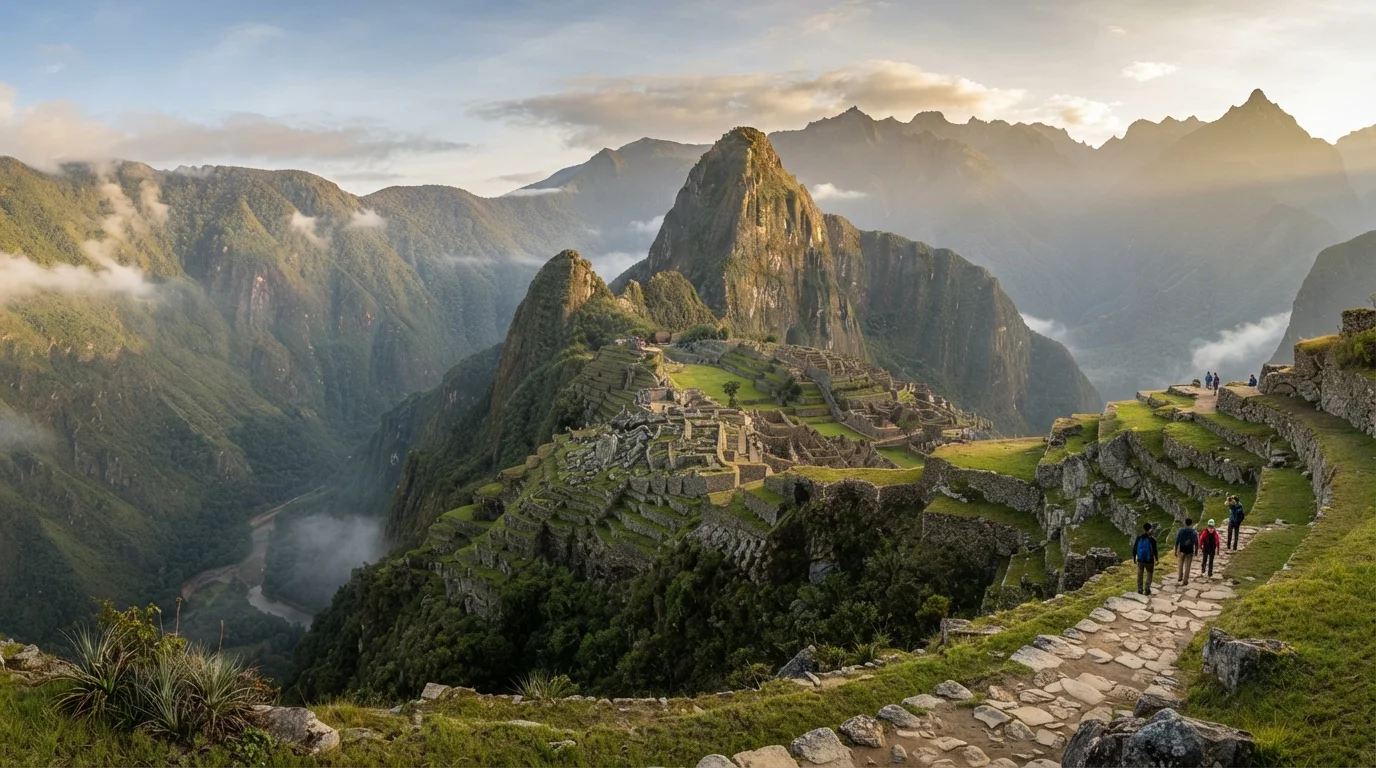
The site is divided into circuits — visitors follow designated one-way paths rather than roaming freely. Different ticket types cover different circuits and optional add-ons such as Huayna Picchu (the steep peak that appears in most iconic photos) or Machu Picchu Mountain. Both peak hikes have their own strict daily limits and sell out far in advance.
~5,000
Maximum daily visitors allowed
Peru's government-imposed daily cap at Machu Picchu is intended to reduce wear on the site's structures and pathways.
7,970 ft
Elevation of Machu Picchu citadel
Lower than Cusco at 11,150 ft, but still high enough to cause altitude-related symptoms for visitors from sea level.
~1.5–2 hrs
Hiking time from Aguas Calientes to entrance
The steep foot trail is an alternative to the shuttle bus for visitors who prefer to walk up to the citadel gate.
Verify current ticket availability and pricing through Peru's official Machu Picchu ticketing platform before making any other travel bookings, as rules and allocations do change.
What the Site Is Really Like
The scale of Machu Picchu is genuinely striking in person — photographs do not fully capture the verticality of the setting or the precision of the stonework. The citadel contains temples, residential areas, agricultural terraces, and water channels, all built without mortar. Walking the circuits takes anywhere from two to four hours depending on pace and the route assigned.
What many photos omit: crowds. Mid-morning, particularly between 9 a.m. and 1 p.m., the site is heavily visited. Arriving at the first entry slot — typically around 6 a.m. — or in the late afternoon gives a noticeably different, quieter experience. Llamas do roam the terraces and are a genuine presence, not a staged attraction.
Weather changes quickly. Morning mist is common and can obscure the mountains entirely. By midday, skies often clear. Afternoon thunderstorms are frequent, particularly in the wet season (roughly November through March). Waterproof layers are not optional gear.
Dress in Layers, Always
Temperatures at Machu Picchu can shift from warm and humid to cool and rainy within an hour. A lightweight waterproof jacket that packs small is one of the most practical items you can bring. Avoid cotton layers that stay wet — quick-dry fabrics handle the climate better.
Practical Logistics Worth Knowing
Large bags and backpacks above a certain size are not permitted inside the citadel — luggage storage is available in Aguas Calientes. Tripods require a special permit and are generally restricted. Drone use is prohibited.
Food and open drinks are not allowed within the ruins themselves, though there is a designated rest area inside where you can access snacks. The town of Aguas Calientes has restaurants and cafes for meals before or after your visit.
Inca Trail Permits Are Separate
The Inca Trail trek to Machu Picchu requires a separate permit from the site entry ticket, and total trekker numbers per day are capped. These permits are managed through licensed tour operators — independent trekking on the Inca Trail is not permitted. Availability for the most popular months (June–August) can run out early in the calendar year.
Aguas Calientes is a small town with limited lodging options that fill quickly during peak season (June through August). Booking accommodation there — or in Ollantaytambo or Cusco — several months in advance is standard practice for popular travel windows.
Setting Honest Expectations
Machu Picchu is worth the planning and the journey for most travelers who make it there. The site is genuinely awe-inspiring, historically layered, and unlike anywhere else in the Western Hemisphere. But it is not a casual side trip, and the logistics require attention.
The visitors who feel disappointed are often those who didn't account for the altitude effect on energy levels, booked tickets too late and got unfavorable time slots, or arrived expecting a quiet wilderness experience. The visitors who leave moved by it are typically those who planned deliberately, paced themselves physically, and went in knowing what the site actually offers — which is a lot, just on its own terms.
“Machu Picchu is not just an archaeological site — it is a living expression of Andean cosmology, engineering, and the relationship between human construction and natural landscape.”
— Johan Reinhard, Archaeologist and National Geographic Explorer-in-Residence, known for high-altitude Andean research
All travel information in this article is general and educational in nature. Entry requirements, ticketing rules, and access logistics are subject to change. Always verify current regulations and entry requirements with official Peruvian government sources and your country's travel advisory before booking.