

Key Takeaways
- Federal law sets a minimum floor for worker protections; states can exceed it but not fall below it.
- Minimum wage, paid leave, anti-discrimination coverage, and non-compete rules vary significantly by state.
- Workers covered by stronger state laws are entitled to those protections even when federal law offers less.
- Your state labor agency - not just the federal DOL - is often the right place to start a complaint.
- Understanding which law applies to your situation can determine whether you have a viable legal claim.
Our Verdict
Federal labor law provides a critical baseline, but millions of workers have stronger protections under state law that they never learn about. Knowing which legal floor applies in your state - especially on wages, leave, and discrimination - is the first step toward asserting rights that may already exist. When state law is stronger, it governs.
| Best for | Recommended |
|---|---|
| Workers in states with higher minimum wages or expanded leave rights | State law protections |
| Workers facing discrimination based on characteristics not covered federally | State anti-discrimination statutes |
| Workers in states without strong labor statutes or in industries exempted by state law | Federal law protections (FLSA, Title VII, FMLA) |
| Workers unsure which law governs their situation | Consultation with state labor agency or employment attorney |
How Federal and State Labor Law Interact
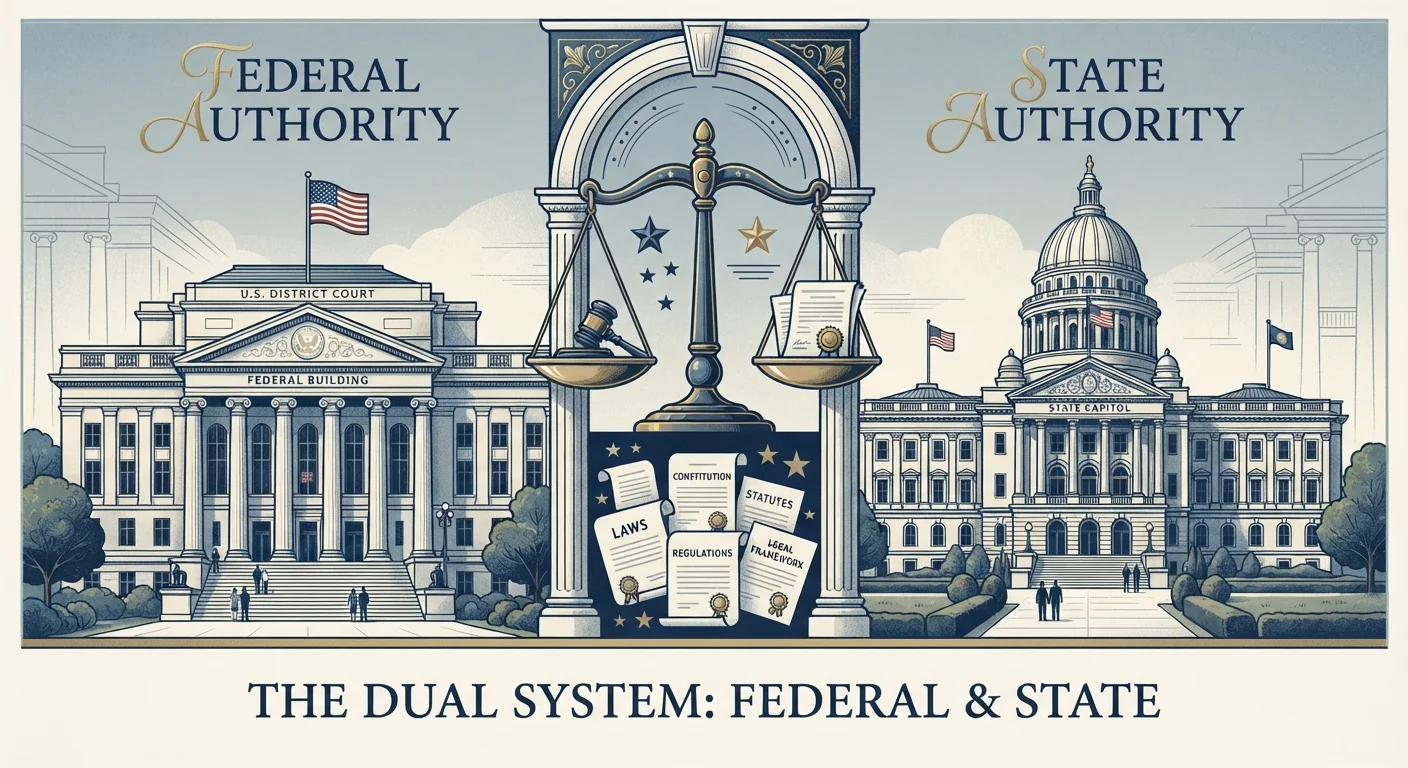
The relationship between federal and state labor law follows a straightforward principle: federal law sets the floor, not the ceiling. The Supremacy Clause of the U.S. Constitution means federal law overrides conflicting state law - but a state is free to give workers more protection than federal statutes require. Where the two conflict and state law is more protective, state law governs for workers in that state.
This framework applies across wage and hour rules, anti-discrimination protections, family leave, and more. The result is a patchwork of rights where two workers doing the same job in neighboring states may have meaningfully different legal protections. For many workers, understanding this gap is the difference between knowing they have a claim and walking away from one.
See also how at-will employment intersects with state-level termination protections - another area where state variation is significant.
Key Areas Where States Commonly Go Further
Several categories of workplace law show the widest gap between the federal baseline and what states actually provide:
Minimum Wage
The federal minimum wage under the Fair Labor Standards Act (FLSA) has been $7.25 per hour since 2009. Many states and some localities have enacted substantially higher minimums - several exceeding $15-$17 per hour. When a state minimum is higher than the federal rate, employers must pay the higher amount. If you believe wages have been withheld, filing a wage complaint with the appropriate agency is a concrete next step.
Paid Leave
Federal law - specifically the Family and Medical Leave Act (FMLA) - provides up to 12 weeks of unpaid leave for qualifying reasons, and only for eligible employees. A growing number of states have enacted paid family and medical leave programs that provide partial wage replacement and sometimes cover workers the FMLA excludes. Understanding what FMLA actually guarantees matters: many workers misunderstand FMLA eligibility and job protection rules.
Anti-Discrimination Protections
Title VII of the Civil Rights Act prohibits discrimination based on race, color, religion, sex, and national origin. Many state laws extend protected categories to include sexual orientation, gender identity, marital status, source of income, and others - well beyond the federal baseline in some jurisdictions. Understanding which protected classes apply in your state is essential before determining whether unfair treatment rises to the level of illegal discrimination.
Non-Compete Agreements
Federal law does not regulate non-compete clauses in employment contracts. State law fills this gap - and dramatically so. Some states, such as California, largely refuse to enforce non-competes. Others impose time, geographic, or scope limits. Workers bound by non-competes should understand that enforceability depends entirely on state law.
| Protection Area | Federal Law Baseline | Stronger State Examples | |
|---|---|---|---|
| Minimum Wage | $7.25/hour (FLSA) | Many states: $15-$17+/hour | |
| Family & Medical Leave | 12 weeks unpaid (FMLA, eligible workers only) | Some states: paid leave, broader eligibility | |
| Anti-Discrimination Classes | Race, sex, religion, national origin, color | Many states add: sexual orientation, gender identity, marital status | |
| Non-Compete Enforceability | No federal regulation | Some states (e.g., CA) largely ban enforcement | |
| Retaliation Protections | Federal activity-specific protections | Some states cover broader whistleblowing acts | |
| Employer Size Thresholds | Title VII applies to 15+ employee firms | Some states cover employers with fewer employees |
Retaliation Protections: Where State Law Fills Gaps
Federal law protects workers from retaliation for engaging in legally protected activities - filing a safety complaint, reporting discrimination, or participating in an investigation. But state laws often extend retaliation protections to activities not covered federally, such as whistleblowing about state regulatory violations, refusing to perform illegal acts, or exercising state-specific leave rights.
Workplace retaliation can be subtle, and the conduct that triggers protection varies by jurisdiction. Workers who face adverse employment action after exercising a state-specific right - such as taking state-mandated paid leave - may have a retaliation claim under state law even if federal protections don't reach the situation.
Check Both Federal and State Agencies
When evaluating a potential workplace claim, don't assume only one agency applies. Depending on your situation, you may have the option to file with the federal Equal Employment Opportunity Commission (EEOC), your state civil rights agency, or both. State agencies sometimes have shorter filing deadlines than federal ones - missing them can forfeit your right to pursue a claim under state law. Verify deadlines with the relevant agency or an attorney as early as possible.
How to Find What Applies in Your State
Because state law varies considerably, identifying the protections that actually apply to you requires looking beyond federal statutes:
- Your state labor department website is the primary resource. Most publish plain-language guides to state wage, leave, and anti-discrimination laws.
- The U.S. Department of Labor's state law resources provide links to each state's labor agency and summaries of state minimum wage laws.
- An employment attorney licensed in your state can evaluate whether your situation involves a federal or state claim - or both.
- State human rights or civil rights commissions often handle anti-discrimination claims that go beyond federal coverage.
It is also worth knowing that some workers - such as domestic workers, agricultural workers, and independent contractors - may be excluded from certain federal protections but covered under stronger state frameworks. Consumer protections at the state level follow a similar pattern: federal law provides a floor, and states frequently build higher.
This article provides general legal information for educational purposes and does not constitute legal advice. Laws vary by state and individual circumstances differ. Consult a licensed attorney in your jurisdiction for guidance specific to your situation.