

Key Takeaways
- Most faucet leaks are caused by worn washers, O-rings, or cartridges - not the faucet body.
- The type of faucet you have determines which part is most likely to fail and how to fix it.
- A dripping faucet can waste more than 3,000 gallons of water per year if left unrepaired.
- Identifying your faucet type before buying replacement parts saves time and money.
- Many faucet repairs are DIY-friendly with basic tools, but persistent leaks may need a plumber.
Leaky Faucet
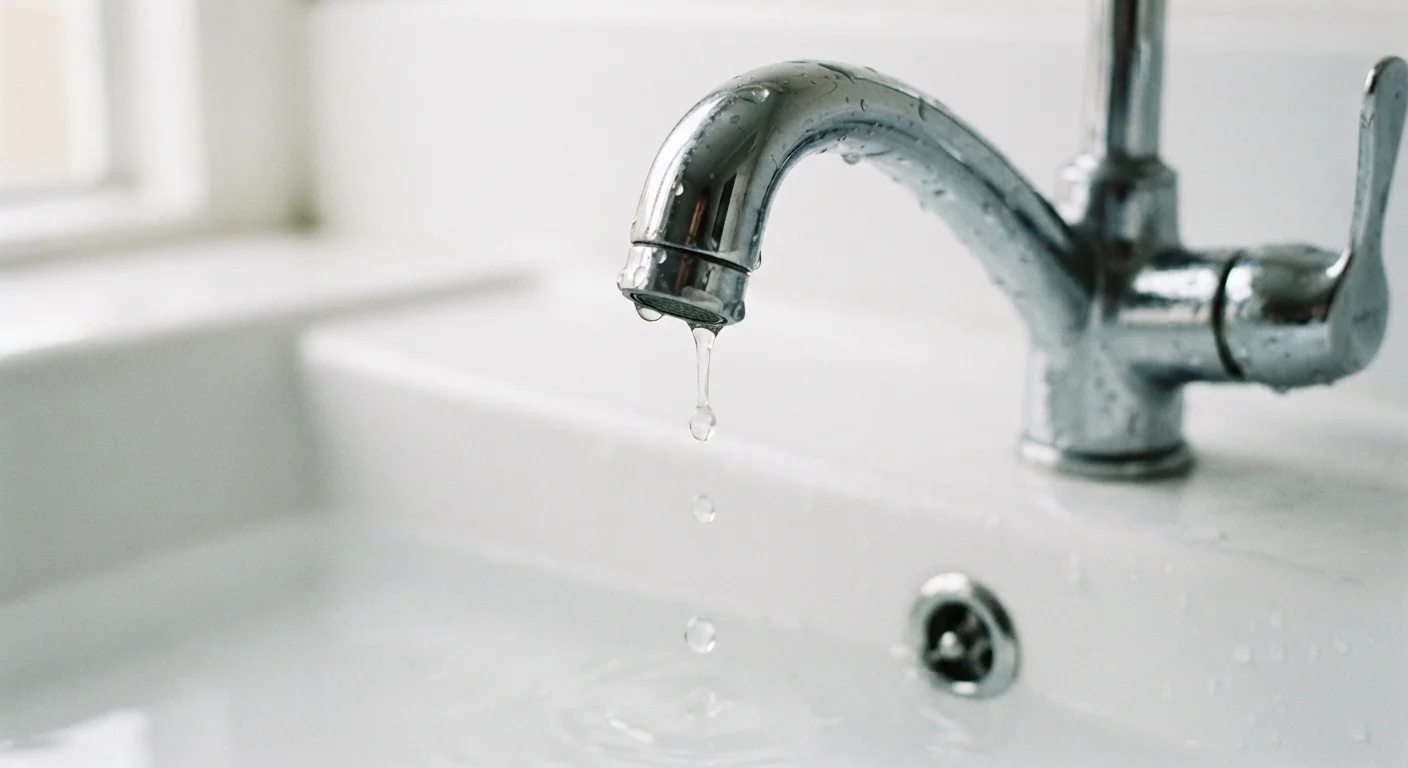
A leaky faucet is any faucet that releases water when it should be fully closed. The leak usually occurs at the spout, the base, or around the handle. In almost every case, the cause is a worn or damaged internal component rather than a problem with the faucet body itself.
Faucet design determines which internal component is most likely to fail - compression faucets rely on rubber washers, while cartridge and ceramic disc faucets use precision-fitted cartridges or disc cylinders to control water flow.
Why Faucets Leak: The Core Problem
Water flows through a faucet only because internal parts create and release a seal on demand. When you turn a handle, a component shifts to open a pathway for water. When you turn it back, that same component presses against a seat or valve to stop the flow. A leak means that seal is no longer complete.
The most common culprits are small and inexpensive: a rubber washer that's gone flat and hard, an O-ring that's cracked, or a cartridge that's worn at its contact points. These parts are designed to wear out - they're the sacrificial components of a faucet's design - which is why most leaks are fixable without replacing the entire fixture.
Shut Off Water Before Any Disassembly
Always close the supply valves located beneath the sink before removing any faucet components. If the valves are stiff or don't fully stop the flow, shut off the main water supply to the house instead. Opening the faucet after closing the valves releases any pressure still in the line, making disassembly safer and drier.
The Four Faucet Types and Their Weak Points
Matching the right repair to the right faucet starts with knowing which type you have. Each design controls water differently, and each has a predictable failure point.
- Compression faucets - the oldest design, with two handles you tighten down. They use a rubber washer pressed against a valve seat to stop water. Washers degrade with use, making this the most frequently repaired faucet type. When the washer wears out, the faucet drips from the spout.
- Ball faucets - identified by a single handle that pivots over a rounded ball-shaped cap. The ball has slots and holes that align with inlet seals and springs to control flow. Springs and inlet seals are the common failure points, along with O-rings on the ball itself.
- Cartridge faucets - available in single- and double-handle versions. A cartridge is a self-contained cylinder that slides up and down (or rotates) to control flow. When it wears out, the faucet drips or is difficult to operate smoothly. Cartridges are usually swapped out as a complete unit.
- Ceramic disc faucets - a modern design with two ceramic plates that rotate against each other. They're highly durable, but ceramic discs can crack if exposed to hard water sediment or if tightened too forcefully. A cracked disc causes leaking from the body of the faucet.
Match the Part to the Brand
Faucet cartridges and disc cylinders are not universal - they're engineered to fit specific models. Before heading to a hardware store, remove the cartridge and bring it with you, or photograph the model number stamped on it. Many manufacturers also maintain online part-finder tools using the faucet's brand and series name.
The Parts You Need to Know
Even if you're not doing the repair yourself, understanding the key components helps you communicate clearly with a plumber and buy the right replacement parts.
- Washer
- A small rubber disc that presses against the valve seat to stop water flow. Found in compression faucets. Available in multiple sizes - match the diameter precisely.
- O-ring
- A circular rubber seal that wraps around the stem or cartridge to prevent leaking at joints and around the handle base. Present in almost every faucet type.
- Cartridge
- A replaceable cylinder that houses the flow-control mechanism in cartridge-style faucets. Brand-specific - you'll need the manufacturer's model number to find the correct one.
- Valve seat
- The surface inside the faucet body that the washer presses against. If the seat becomes pitted or corroded, even a new washer won't create a full seal. A plumber's seat wrench can resurface it.
- Packing nut
- Secures the stem assembly in place and helps prevent leaks around the handle. If the faucet leaks from the handle area, the packing nut may simply need tightening.
3,000+
Gallons wasted per year by one dripping faucet
The U.S. Environmental Protection Agency (EPA) estimates a faucet dripping once per second wastes over 3,000 gallons annually.
10%
Of homes have leaks wasting 90+ gallons daily
The EPA's WaterSense program reports that roughly 1 in 10 homes has plumbing leaks accounting for 90 or more gallons of water lost each day.
Before You Buy Parts or Call a Pro
A few minutes of investigation before purchasing anything will save you a second trip to the hardware store. Start by shutting off the water supply at the valves under the sink, then remove the handle (usually held by a screw under a decorative cap) to expose the internal mechanism. Take photos as you disassemble - reassembly is much easier with a visual record.
Write down the faucet brand and look for a model number stamped on the cartridge or valve body. Many manufacturers offer model-specific repair kits that include all the commonly worn parts for that design. If the valve seat looks pitted or corroded, that's a sign you may want a plumber's input - resurfacing a seat without the right tool can make the problem worse.
For leaks that return quickly after a repair, or for faucets with significant corrosion inside, full replacement may be more practical than repeated fixes. A licensed plumber can assess whether repair or replacement makes more sense for your situation.