

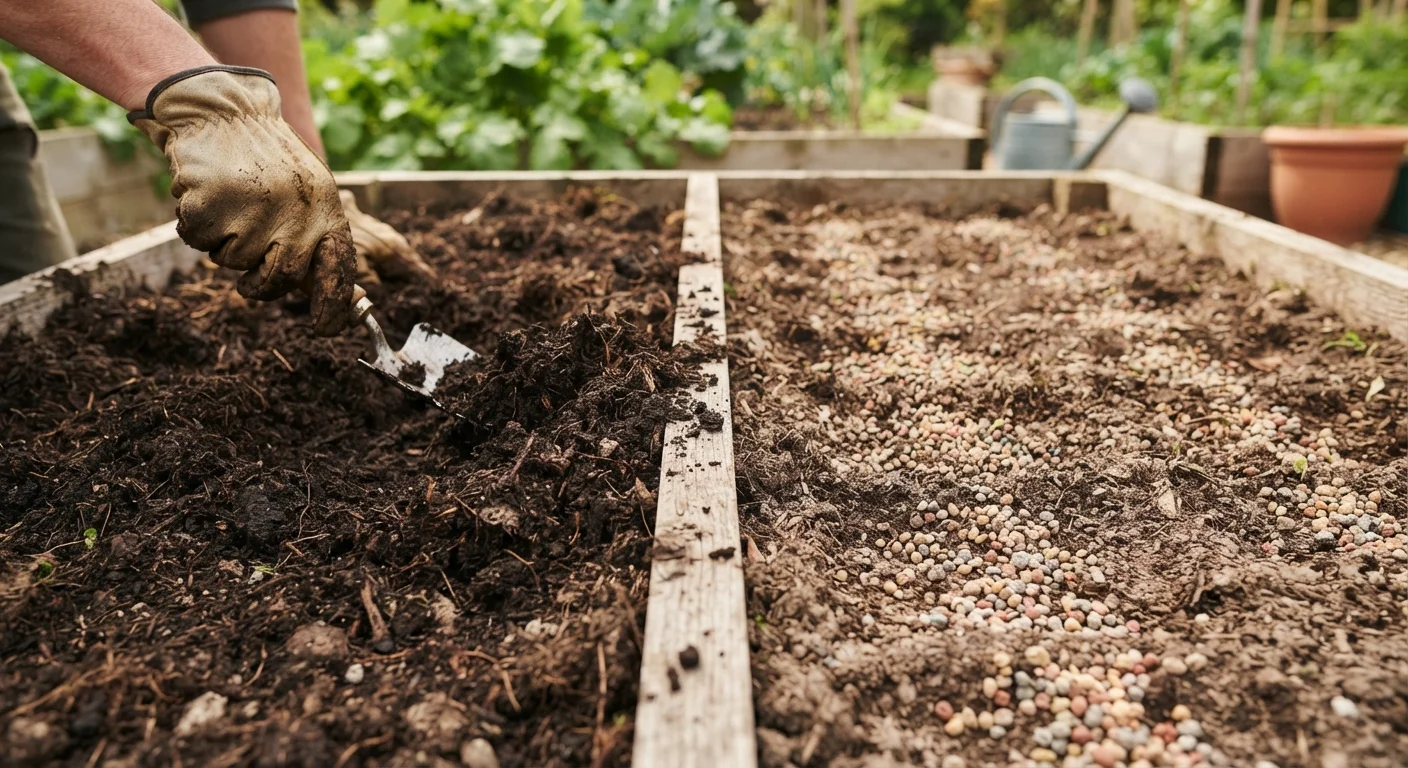
Key Takeaways
- Compost improves the physical and biological condition of soil, not just its nutrient content.
- Fertiliser delivers specific nutrients - usually nitrogen, phosphorus, and potassium - in concentrated form.
- Using both together is often the most effective approach for a healthy, productive garden.
- Compost works slowly over months; fertiliser can act within days to weeks.
- Over-applying fertiliser can harm plants and pollute waterways; follow label guidance carefully.
Option A
Compost
The long-game soil builder.
Best for: Gardeners who want to improve soil structure, water retention, and microbial life over time.
Option B
Fertiliser
The targeted nutrient boost.
Best for: Gardens with a specific nutrient deficiency or plants that need a quick growth stimulus.
If you're starting a new garden bed in poor or compacted soil
Compost
Building healthy soil structure is the foundation everything else depends on. Compost improves drainage, aeration, and microbial activity - none of which fertiliser can do.
If a soil test reveals a specific nutrient deficiency
Fertiliser
When you know exactly what's missing - say, low nitrogen - a targeted fertiliser corrects the problem faster and more precisely than compost alone.
If you want a sustainable, low-maintenance approach over many seasons
Compost
Regular compost applications reduce the need for added fertiliser over time by creating a self-sustaining soil ecosystem.
If you're growing heavy-feeding crops like tomatoes or corn mid-season
Fertiliser
Fast-growing, high-demand plants often need more nutrients than compost alone provides during peak growing periods.
What Compost Actually Does to Your Soil
Compost is decomposed organic matter - food scraps, leaves, grass clippings, and similar materials that have broken down into a dark, crumbly substance often called humus. But calling it a fertiliser misses the point. Compost's primary job is to improve soil structure and biology, not to flood plants with nutrients.
When you work compost into your soil, several things happen at once. The organic matter creates tiny air pockets that improve drainage in clay soils and help sandy soils retain moisture. It feeds beneficial microbes, fungi, and earthworms - the underground workforce that converts organic material into plant-available nutrients naturally. Over time, compost raises the cation exchange capacity (CEC) of your soil, which is its ability to hold onto nutrients and make them available to plant roots rather than letting them wash away.
Compost does contain nutrients, but in modest, slow-release amounts that vary depending on what it was made from. You shouldn't think of it as a feeding tool - think of it as a long-term investment in your soil's health and resilience.
| Criterion | Compost | Fertiliser |
|---|---|---|
| Primary function | Improves soil structure and biology | Delivers concentrated nutrients to plants |
| Speed of effect | Slow - months to years | Fast - days to weeks |
| Nutrient content | Low, variable, slow-release | High, precise, fast or slow-release |
| Soil biology impact | Feeds and supports microbes | Minimal to none |
| Risk of over-application | Very low | Moderate to high |
| Best used for | Long-term soil health | Correcting specific deficiencies |
What Fertiliser Does - and What It Can't
Fertiliser delivers concentrated nutrients directly to plants. Most fertilisers are formulated around three key elements: nitrogen (N), phosphorus (P), and potassium (K), shown as three numbers on the label (for example, 10-10-10). Some also include secondary nutrients like calcium, magnesium, or sulfur.
These nutrients are available to plants relatively quickly - especially synthetic or soluble types - which is why fertiliser is useful when a plant shows signs of deficiency or when a soil test reveals a specific gap. Organic fertilisers (like fish emulsion or bone meal) release more slowly but still deliver a more nutrient-dense punch than compost.
What fertiliser cannot do is improve soil texture, support microbial life, or build the long-term capacity of your soil. Applied to compacted or depleted ground, nutrients may simply wash away before plants can use them. Without good soil structure to hold moisture and nutrients in place, even the best fertiliser delivers diminishing returns.
~1%
Average nitrogen in finished compost
Compared to a typical granular fertiliser, which may contain 10-46% nitrogen by weight, compost is nutrient-lean but structurally rich.
2-4 inches
Recommended annual compost layer
Most university extension services recommend applying 2-4 inches of compost per season to maintain and improve soil organic matter over time.
Over-application is also a real risk. Excess nitrogen can burn plant roots, promote leafy growth at the expense of fruit or flowers, and run off into local waterways, contributing to water quality problems. Always follow label rates and, where possible, base applications on a soil test.
How to Use Both Together Effectively
The most productive gardens typically use compost and fertiliser as a team rather than choosing one over the other. A practical approach looks like this:
- Build the base with compost. Work 2-4 inches of finished compost into your beds each season - ideally in fall or early spring. This improves soil over time and reduces how much fertiliser you'll need.
- Test before you add. A simple soil test (available through most cooperative extension offices) tells you what nutrients are actually lacking. Don't guess - over-correcting can cause its own problems.
- Use fertiliser surgically. Apply fertiliser when plants have a demonstrated need: transplanting, early-season growth spurts, or mid-season feeding for heavy producers like squash or peppers.
- Match the product to the situation. Slow-release organic fertilisers pair well with compost-amended soil. Fast-release synthetics are better suited for correcting acute deficiencies quickly.
A Note on Organic vs. Synthetic Fertilisers
Both organic and synthetic fertilisers supply nutrients, but they behave differently in soil. Organic options like blood meal or kelp meal break down more slowly and can support some soil biology as they decompose. Synthetic fertilisers are often faster-acting and more precisely formulated. Neither type replaces the structural and biological benefits of compost. When in doubt, a soil test is your most reliable guide to what your garden actually needs.
Over several seasons, well-composted soil often needs less fertiliser because its biology becomes more self-sustaining. That's the payoff of the long-game approach.