

Key Takeaways
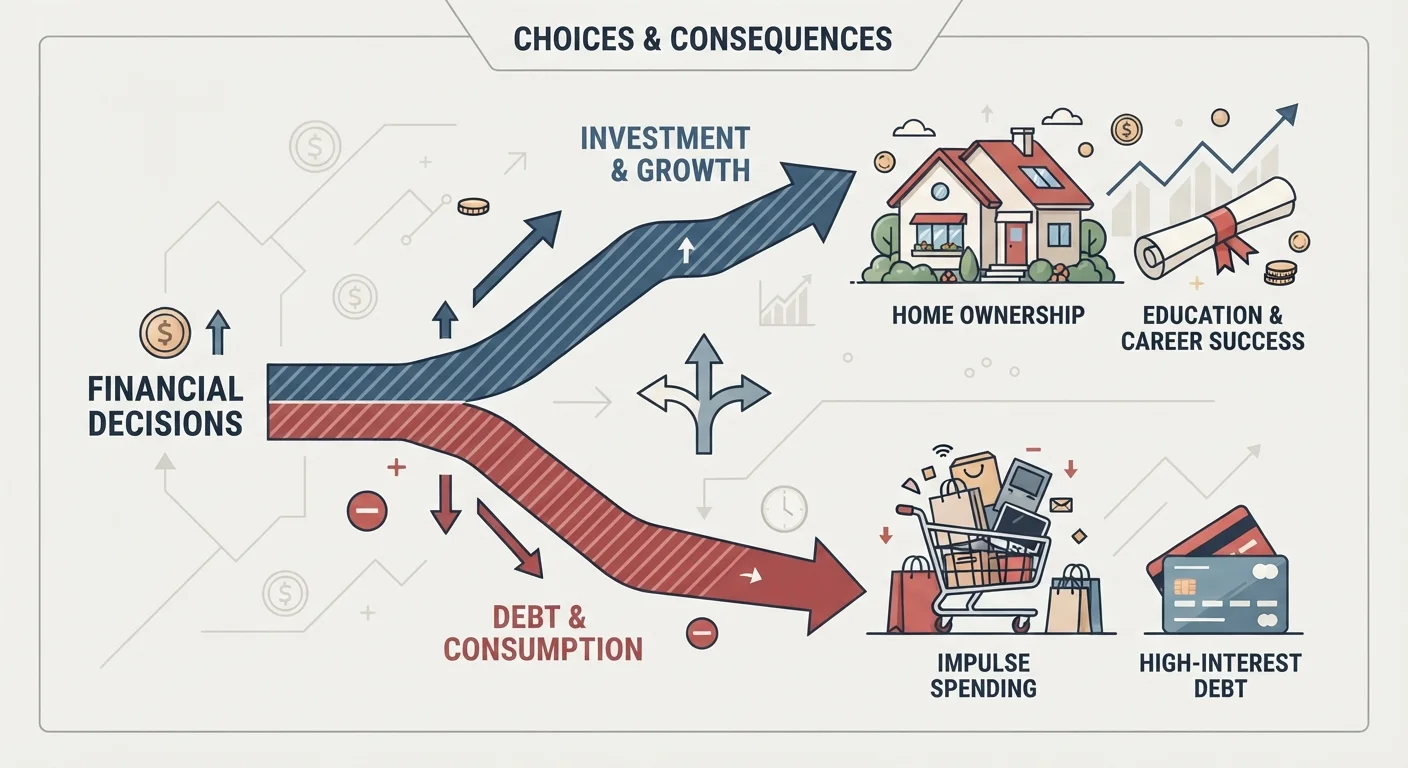
- Good debt typically funds assets or opportunities that increase in value or earning power.
- Bad debt usually carries high interest and funds depreciating items or short-term consumption.
- Interest rate is one of the most important factors separating manageable debt from damaging debt.
- Even 'good' debt becomes a burden when the amount borrowed exceeds your ability to repay.
- Classifying your debts helps you prioritize repayment and make smarter borrowing decisions.
Option A
Good Debt
Borrowing that builds long-term value or earning potential.
Best for: Financing education, a home, or investments expected to grow or generate income over time.
Option B
Bad Debt
Borrowing that erodes wealth with little lasting return.
Best for: Understanding which obligations to prioritize paying down first to improve your financial position.
If you're weighing whether to take out a student loan
Good Debt (with caution)
Education debt can raise earning potential, but only if borrowing is proportionate to expected income. Overborrowing for a degree with limited job market demand shifts it firmly toward bad debt territory.
If you're carrying a high-interest credit card balance
Bad Debt - prioritize repaying it
Revolving credit card debt at double-digit interest rates costs you significantly over time with no offsetting asset value. Paying it down is typically the highest guaranteed return available.
If you're considering a mortgage to buy a home
Good Debt (generally)
A mortgage at a reasonable interest rate funds an asset that typically holds or grows in value, while building equity over time. Affordability and terms still matter.
If you're financing a vehicle you need for work
Good Debt (context-dependent)
An auto loan for a necessary work vehicle can be reasonable if terms are manageable. Financing a luxury vehicle beyond your budget for lifestyle reasons leans toward bad debt.
Why the Distinction Matters
The word "debt" often carries a negative connotation - but treating all debt the same leads to poor financial decisions. Understanding whether a given obligation is likely to work for you or against you is the foundation of managing credit effectively.
Good debt, in general terms, is borrowing that funds something likely to increase your net worth or earning power over time. Bad debt, by contrast, is typically high-cost borrowing used to fund purchases that lose value quickly or that serve only immediate consumption. The distinction is not always clean-cut, but the framework is practically useful.
For a broader grounding in credit concepts, see our end-to-end credit and debt resource.
| Criterion | Good Debt | Bad Debt |
|---|---|---|
| Typical interest rate | Lower (e.g., mortgage, federal student loans) | Higher (e.g., credit cards, payday loans) |
| What it typically funds | Appreciating assets or earning potential | Depreciating goods or consumption |
| Long-term net worth impact | Potentially positive if managed well | Generally negative over time |
| Common examples | Home mortgage, student loan, business loan | Credit card balance, payday loan, luxury auto |
| Repayment priority | Lower urgency when rates are low | Higher urgency due to compounding cost |
What Makes Debt 'Good': Key Characteristics
Debt tends to fall on the productive side of the ledger when it meets several general criteria:
- Low relative interest rate: Mortgages and federal student loans often carry rates considerably lower than consumer credit products, reducing the long-term cost of borrowing.
- Funds an appreciating or income-generating asset: Real estate and education are the most commonly cited examples. Both can build value or earning capacity over time, though outcomes vary by individual circumstances and market conditions.
- Manageable repayment terms: Monthly obligations that fit within your budget without crowding out other financial priorities are far less damaging than debt that stretches your cash flow to its limit.
It's worth noting that no debt is automatically good. A mortgage taken on a property beyond your means, or a degree financed at high cost in a low-demand field, can quickly become financially harmful regardless of how the debt is categorized. Always consider your personal repayment capacity alongside the type of debt.
20%+
Average US credit card APR
Federal Reserve data has shown average credit card interest rates consistently exceeding 20% APR in recent years, illustrating the cost burden of revolving balances.
~45M
Americans with student loan debt
According to Federal Student Aid data, roughly 45 million borrowers hold federal student loan debt, making it one of the most common forms of 'good debt' in the US.
3-7%
Typical 30-year fixed mortgage rate range (historical)
Mortgage rates have historically ranged between 3% and 7% over the past decade, illustrating why home loans are often cited as a lower-cost borrowing option compared to consumer credit.
What Makes Debt 'Bad': The Warning Signs
Bad debt is generally characterized by high interest rates, financing for depreciating assets, or borrowing to fund ongoing consumption rather than investment. Common examples include:
- Credit card revolving balances: When balances aren't paid in full each month, interest compounds rapidly. Average credit card interest rates in the US have consistently exceeded 20% APR in recent years, according to Federal Reserve data.
- Payday and high-cost personal loans: These products often carry extremely high effective interest rates and are structured in ways that can trap borrowers in cycles of refinancing.
- Financing depreciating purchases: Borrowing to buy consumer electronics, clothing, or vacations means paying interest on items with no residual value by the time the debt is repaid.
If you're managing multiple high-interest obligations, the debt avalanche and debt snowball methods offer structured approaches to tackling them efficiently. You might also explore whether debt consolidation makes sense - though it comes with its own trade-offs.
Context Changes the Category
The good debt/bad debt framework is a starting point, not a rigid rule. An auto loan at a low interest rate for a reliable vehicle you need to earn income sits in very different territory than the same loan taken out for an expensive vehicle you can barely afford. The interest rate, the asset involved, and your personal financial situation all interact. Use the categories as a lens, not a verdict.
Applying the Framework to Your Own Debt
Classifying your debts isn't about labeling yourself a good or bad borrower - it's a practical exercise. List each debt you carry, its interest rate, what it funded, and whether it still holds value. That snapshot helps you prioritize: high-rate consumer debt almost always warrants paying down ahead of low-rate mortgage balances.
Remember that circumstances shift. A manageable car loan can become bad debt if your income drops. A student loan that once seemed proportionate can feel crushing if career outcomes don't match expectations. Regularly reviewing your debt picture - not just when it feels like a crisis - builds the kind of financial awareness that keeps you in control. For more on staying on top of debt without letting it run your life, see our practical habits guide.
This article is for general informational purposes only and does not constitute personalized financial or legal advice. For guidance specific to your situation, consult a qualified financial adviser or credit counselor.